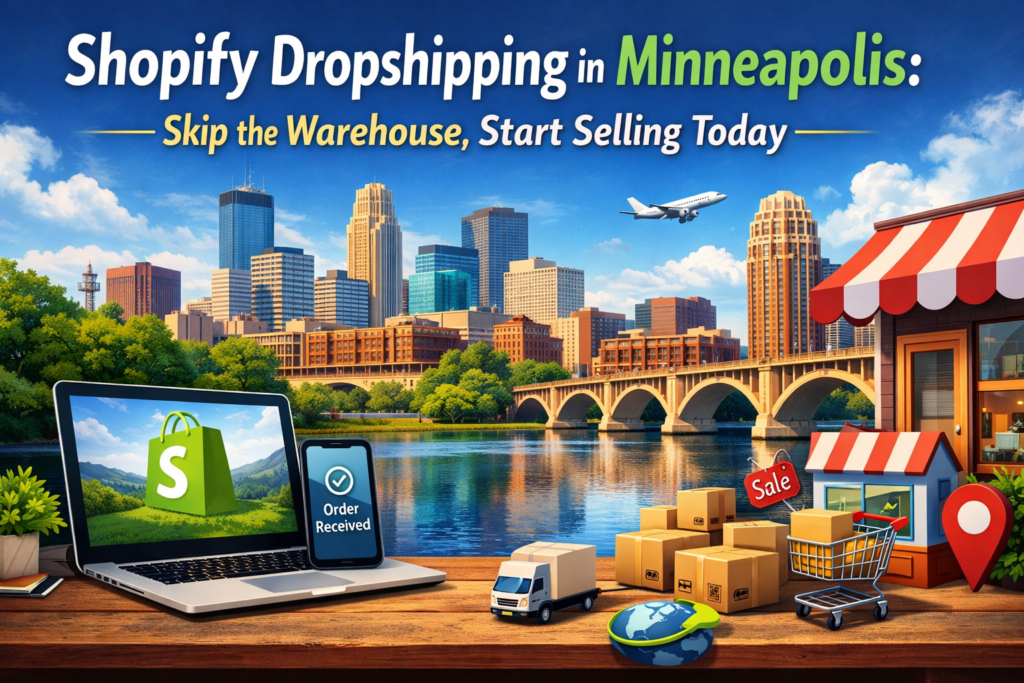
Shopify Dropshipping in Minneapolis: Skip the Warehouse, Start Selling Today
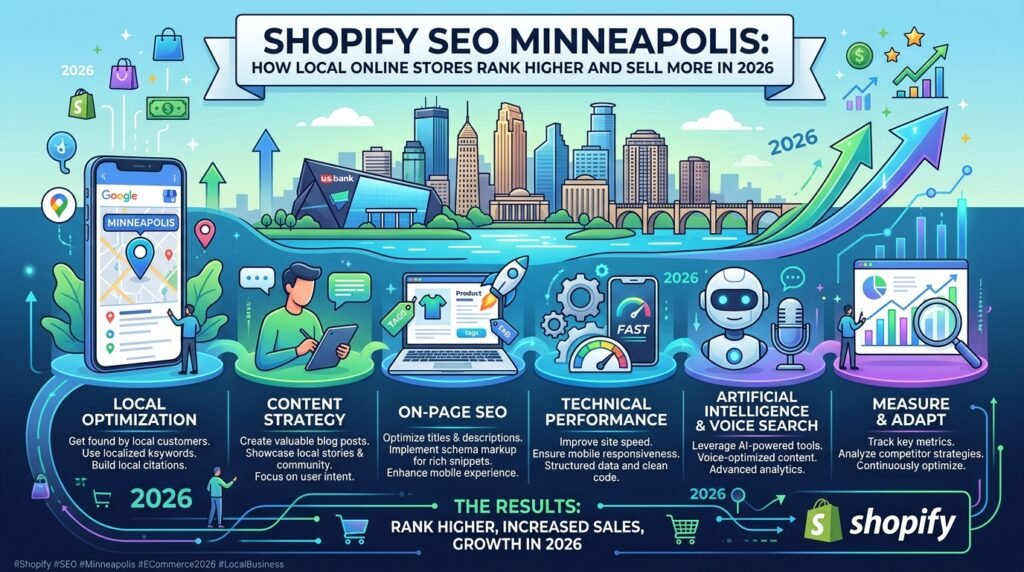
Why Minneapolis Entrepreneurs Are Ditching Inventory (And Winning) Retail is shifting hard in the Twin Cities. Storefront costs on Nicollet Mall aren’t getting cheaper. Warehouse leases in Northeast Minneapolis are competitive. And yet, a growing number of local entrepreneurs are building six-figure product businesses without touching a single box. That’s the power of Shopify dropshipping. You list products in your online store. A customer in Uptown places an order. Your supplier ships it directly to their door. You pocket the margin. No storage unit in Bloomington. No 5 AM inventory runs. This guide is for Minneapolis-based business owners who are ready to build something real, fast. What Is Shopify Dropshipping, Really? Let’s keep this simple. Dropshipping is a fulfillment model where you sell products online without holding stock. Shopify is the platform that powers your storefront, checkout, and backend operations. Together, they form one of the lowest-barrier-to-entry business models available to Minnesota entrepreneurs in 2026. You’re essentially a curator and a marketer. The logistics are handled upstream. The Minnesota Department of Employment and Economic Development has repeatedly highlighted ecommerce as one of the fastest-growing business sectors in the state. You’re not chasing a trend. You’re meeting a market. Step 1: Choose a Niche That Works for a Minneapolis Audience Don’t try to sell everything to everyone. Minneapolis has a distinct consumer culture. Outdoor gear. Sustainability-focused products. Scandinavian-inspired home goods. Health and wellness. Cold-weather essentials. Local pride merchandise. These categories resonate here. Start by asking: what does someone in the North Loop actually want to buy at 10 PM on a Tuesday? Research tools like Google Trends, Semrush, and even browsing Minneapolis subreddits will surface demand signals faster than any guru course will. Look for niches with consistent search volume, low local competition, and at least three viable suppliers. Tight niche. Strong positioning. That’s the foundation. Step 2: Set Up Your Shopify Store the Right Way Go to Shopify.com. Start your free trial. Seriously, stop overthinking this step. The platform is built for non-developers. You can have a functional, professional-looking store live within a weekend. Here’s what matters most on setup: Pick a clean, fast theme. Speed is an SEO and conversion factor. Themes like Dawn or Refresh load fast and convert well on mobile, where most Minneapolis shoppers are browsing from. Write original product descriptions. Do not copy-paste from your supplier. Google sees duplicate content as a red flag. Write descriptions that speak to your Minneapolis customer’s actual lifestyle and pain points. Set up your domain. A custom domain builds trust instantly. Something like ShopNorthMPLS.com or MinnMade.co signals local legitimacy. Install the essentials: Shopify Payments, a tax app configured for Minnesota sales tax (currently 6.875% state rate plus local), and a customer review app. Step 3: Source Suppliers You Can Actually Trust Your supplier is your silent business partner. A bad one will tank your reputation with one delayed shipment during a Minneapolis winter holiday rush. A good one makes your store look like a seasoned operation from day one. Top sourcing platforms worth evaluating: AutoDS, Strong automation, integrates directly with Shopify, solid product catalog depth. Spocket, Prioritizes US and EU-based suppliers, meaning faster shipping times to your Minnesota customers. Zendrop, US-based fulfillment options and strong branding features for building a real brand identity. AliExpress via DSers, Largest product volume, but vet suppliers individually. Look for order counts above 1,000 and ratings above 4.7. Order samples before you list anything. You are staking your brand on product quality. Step 4: Build an SEO Strategy Built for Minneapolis Search This is where most people leave money on the table. Generic SEO advice won’t move the needle for a Minneapolis-based Shopify store targeting local and regional buyers. You need a localized content and keyword strategy built around how Twin Cities shoppers actually search. Target hyper-local keywords. Phrases like “buy [product] Minneapolis,” “best [product] shop Twin Cities,” and “Minnesota [product type] store” have lower competition and higher buyer intent than national terms. Create location-specific landing pages. If you’re shipping fast to Edina, St. Paul, Plymouth, or Duluth, say so. Create content that speaks directly to those audiences. Use Predictive SEO tactics. In 2026, Google’s Search Generative Experience (SGE) and AI Overviews are reshaping how results display. Optimize for conversational queries, structured data, and entity-based content, not just keyword stuffing. Your product pages should answer real questions, not just rank for terms. Build topical authority. A blog that covers Minneapolis ecommerce trends, local business spotlights, and product use cases relevant to Minnesota life builds the kind of E-E-A-T signals Google rewards with visibility. Step 5: Drive Traffic Without Burning Your Budget A beautiful store with no visitors is just an expensive hobby. Minneapolis entrepreneurs have a real advantage here: a tight-knit local business community, strong social media engagement, and an audience that actively supports independent brands. Meta and Instagram Ads, Start with a $15–$25/day test budget. Target Minneapolis and surrounding zip codes. Run creative that speaks to local identity. Cold weather humor lands here. Local landmarks resonate. TikTok Shop integration, If your niche skews under 35, TikTok’s organic reach is still underpriced in 2026. Product demos, local content, and authentic storytelling build trust fast. Email marketing from day one, Use Klaviyo integrated with your Shopify store. Every visitor who doesn’t buy is a future customer if you capture their email. Build sequences that nurture, not just promote. Local SEO-driven content, Blog posts targeting “best home goods stores Minneapolis” or “affordable outdoor gear Twin Cities” can drive consistent organic traffic without ongoing ad spend. AI Personalization: The 2026 Edge Most Minneapolis Stores Are Missing Personalization is no longer optional. AI-driven personalization tools, now built into or available via Shopify apps, analyze browsing behavior, purchase history, and even time-of-day patterns to deliver dynamic product recommendations, personalized email flows, and custom site experiences. For a Minneapolis audience that shops intentionally, personalization increases average order value and repeat purchase rate dramatically. Apps like LimeSpot, Rebuy, or Shopify’s native recommendations are worth installing early. The stores that win